

Important Notice
This item is made-to-order exclusively for you once your order is placed. As a result, it is not eligible for cancellation or return under our standard policy. Your statutory rights remain unaffected.
Free Tyre Inflator. Spend £500+ (ex VAT) View
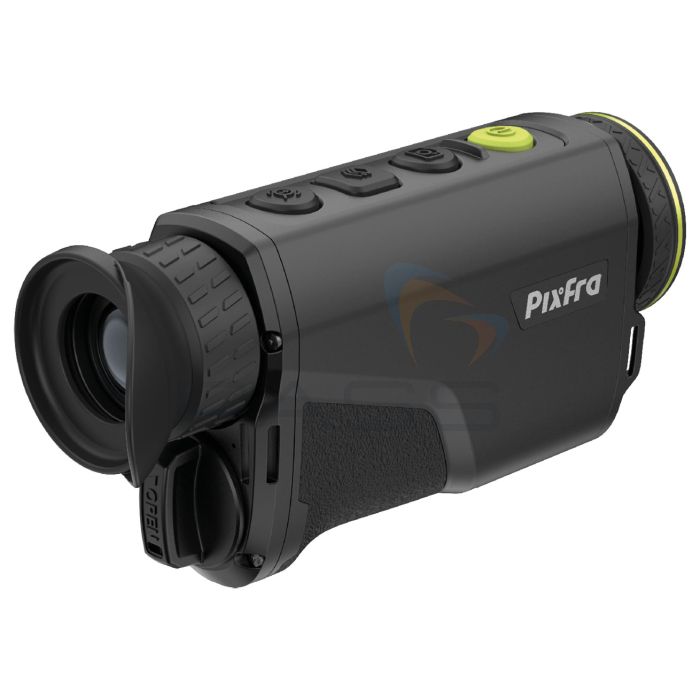
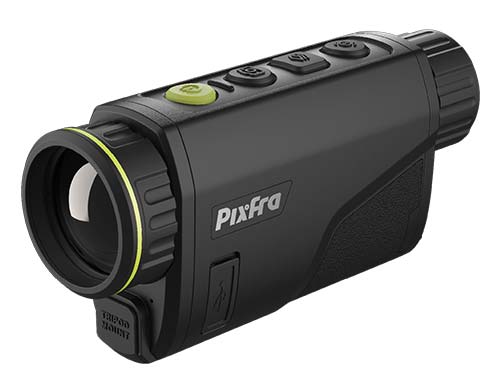
Pixfra Arc A604 Pro Ecology Thermal Imaging Monocular

- 4 mm f/1.0 objective lens
- <18 mK NETD thermal sensitivity
- 640 x 512, 12 µm thermal sensor
SKU
PIX-PFI-A604P
MPN
PIX-PFI-A604P
Pixfra Arc A604 Pro Handheld Thermal Imaging Monocular
The Pixfra Arc A604 Pro pairs a 640×512, 12μm thermal sensor (<18mK NETD sensitivity) with a 4mm f/1.0 lens for a 102° field of view. It suits ecologists and conservationists who need to watch a wide area or work close to small, fast-moving subjects: bat surveys, roost monitoring, habitat observation and wider animal behaviour studies.
It detects heat sources up to 200m away and focuses down to a short minimum distance, so one device covers both wide-area scanning and close examination of insects, invertebrates and small mammals.
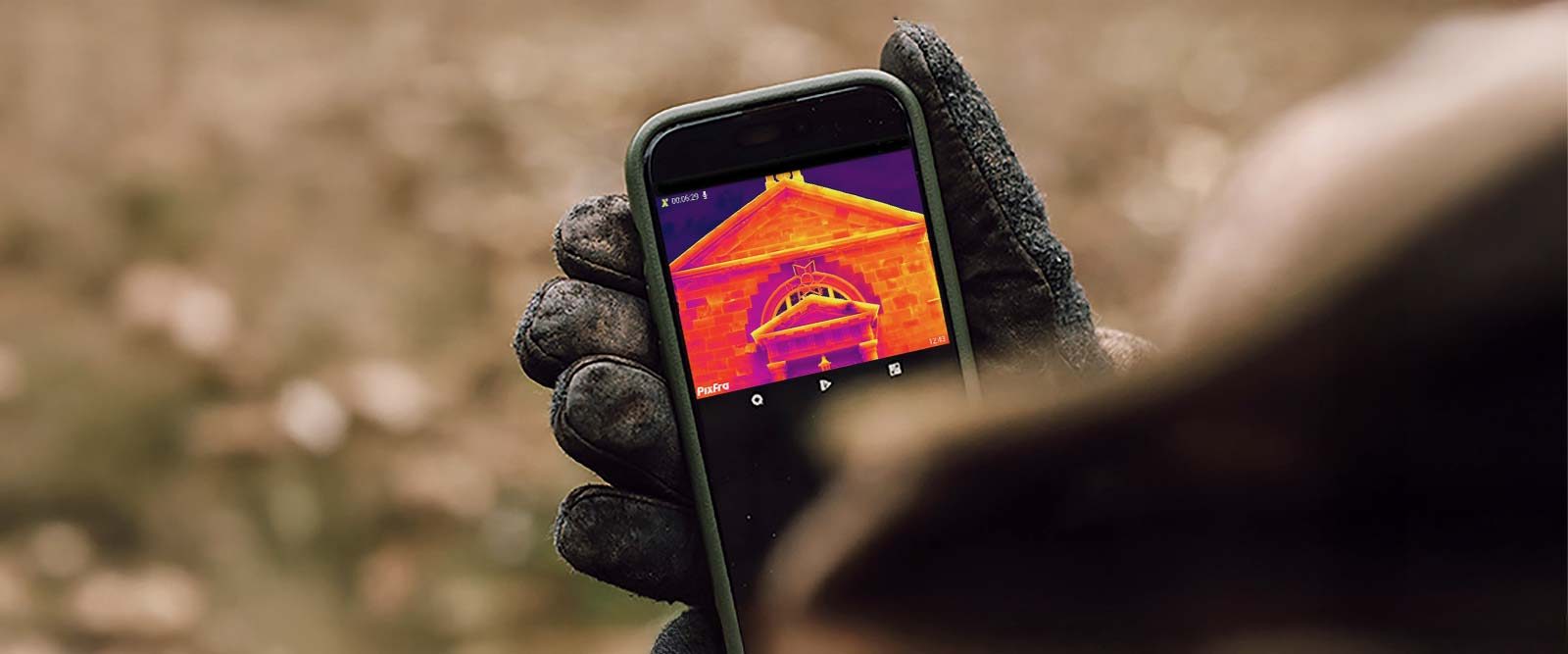
Video records continuously with sound in 30-minute clips to 32GB of internal storage, alongside still image capture. Mount it on a tripod for unattended recording of a roost or habitat, or hold it for spot checks, streaming the live view to the free Pixfra app for solo or group monitoring.

What people like:
Key features
- 102° horizontal field of view from a 4mm f/1.0 lens
- 640×512, 12μm thermal sensor
- <18mK NETD sensitivity
- Detects heat sources up to 200m away
- Short close-focus distance for close-up work
- Continuous video with audio, saved in 30-minute clips
- 32GB internal storage
- Two replaceable batteries, up to 6 hours each
- Live view on up to 4 devices via the free Pixfra app
- IP67 waterproof rating
Built for ecology and bat surveys

A604 Pro specs that matter on a bat survey
Emergence counts, roost checks and dusk-to-dawn monitoring each lean on a different part of the specification. Here is where the A604 Pro stands on each.
Wide field of view
The A604 Pro's 4mm f/1.0 lens gives 102° × 83°, so a whole roost exit stays in one frame
Close focus
The same wide lens focuses down to 20mm, for interior roost checks and bats at rest
Thermal sensitivity
A 640×512, 12μm sensor at <18mK NETD picks out small heat signatures against cooling brickwork
50Hz frame rate
At 50Hz the A604 Pro tracks fast, erratic flight without smearing between frames
Recording with audio
Tripod-mount it and record video with sound to 32GB of built-in storage, for review after the survey
Battery life
Up to 6 hours from its 3,200mAh battery, topped up over USB-C from a power bank
An ultra-wide 102° field of view
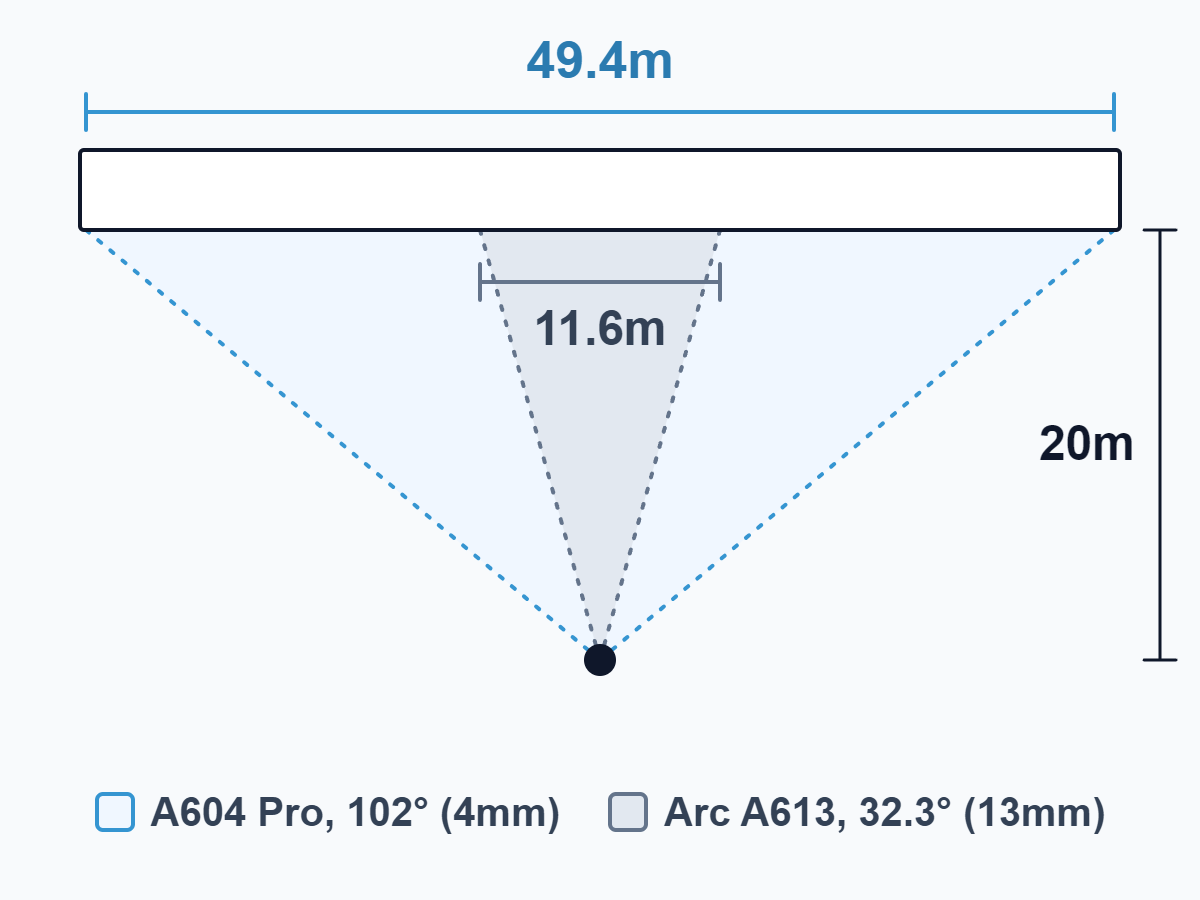
The A604 Pro's 4mm f/1.0 lens gives a 102° horizontal, 83° vertical field of view. On a thermal lens, field of view and detection range move in opposite directions: a shorter focal length widens the view and shortens the distance a heat source can be picked up at. The A604 Pro sits at the wide end of that scale.
In practice, that means covering a habitat, a barn interior or a whole roost exit in a single view, rather than panning across it and missing something between sweeps. The narrower 13mm lens on the Arc A613 Pro Ecology makes the opposite trade: it covers less of the scene, but detects heat sources out to 700m, so it suits open ground and longer survey distances.
Whole-scene coverage from the 4mm lens
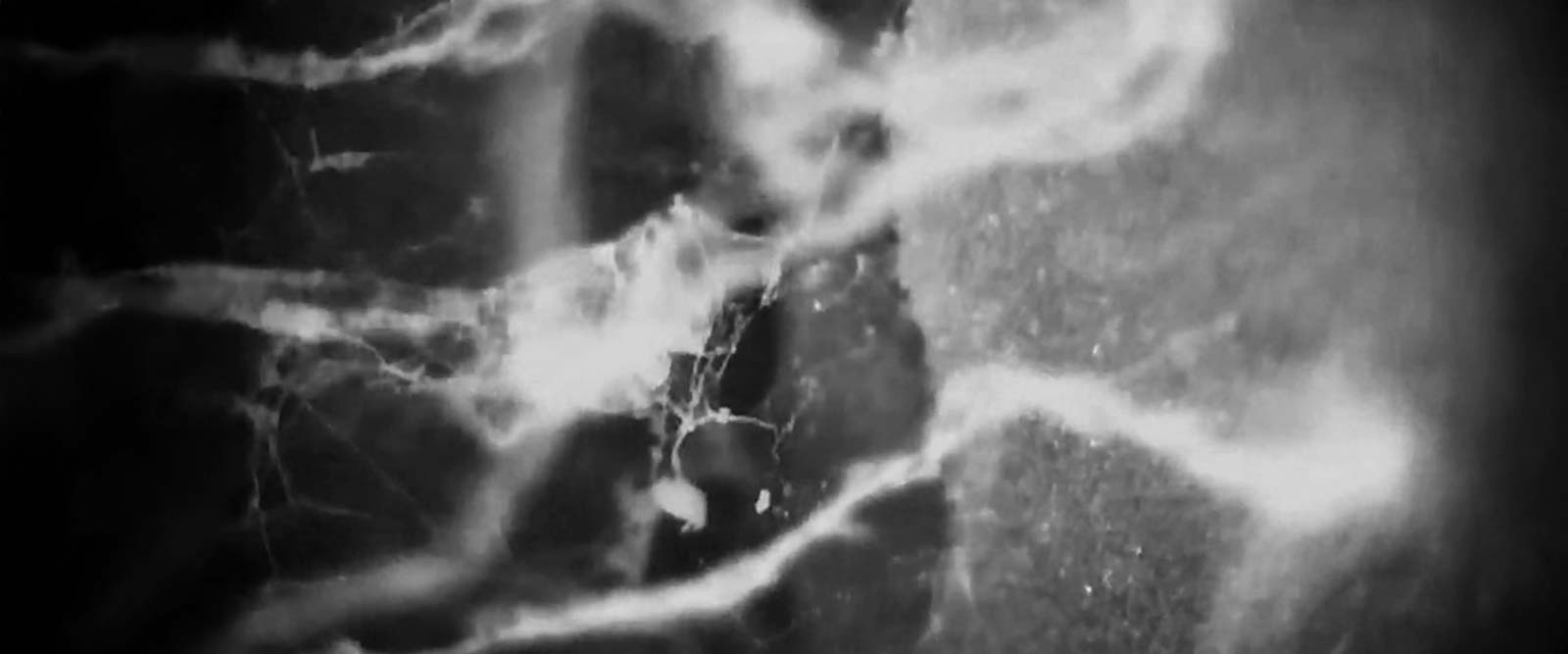
Bats leaving a roost and animals crossing open ground move fast and rarely where you expect. On the A604 Pro, the 4mm lens holds the whole scene in one view, so there is less panning and fewer missed exits.
Bats leaving a roost and animals crossing open ground move fast and rarely where you expect. On the A604 Pro, the 4mm lens holds the whole scene in one view, so there is less panning and fewer missed exits.
Built for close-up work too
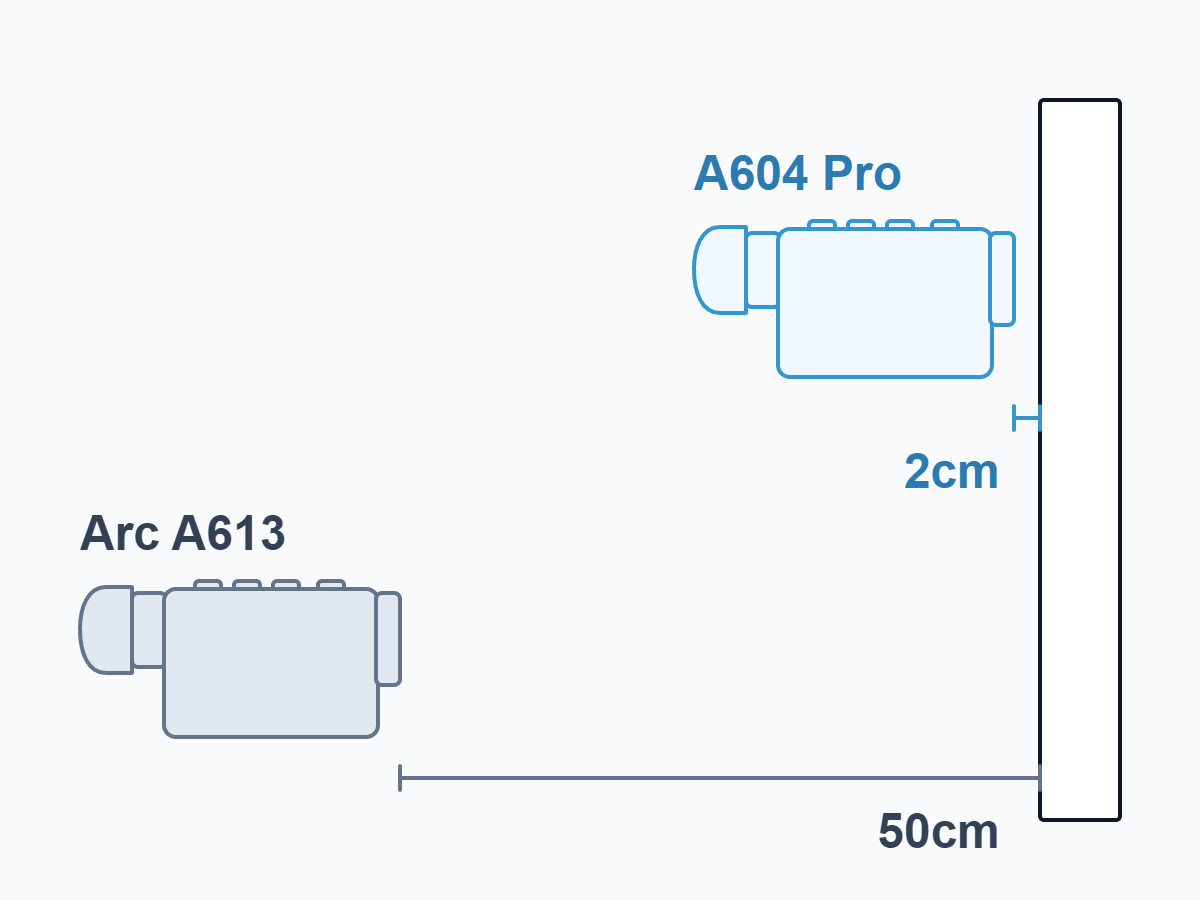
A short close-focus distance is the other side of the same wide lens. It lets the A604 Pro handle survey work a longer-range device cannot: inspecting insects and invertebrates, observing small mammals non-invasively, or reading fine-scale heat patterns close up.
Short close-focus distance
A subject closer than a monocular's minimum focus is a blur, whatever the sensor. The A604 Pro focuses down to a short minimum distance, so interior roost checks and invertebrate work happen on the same device you scan with.
A subject closer than a monocular's minimum focus is a blur, whatever the sensor. The A604 Pro focuses down to a short minimum distance, so interior roost checks and invertebrate work happen on the same device you scan with.
Continuous, unattended recording
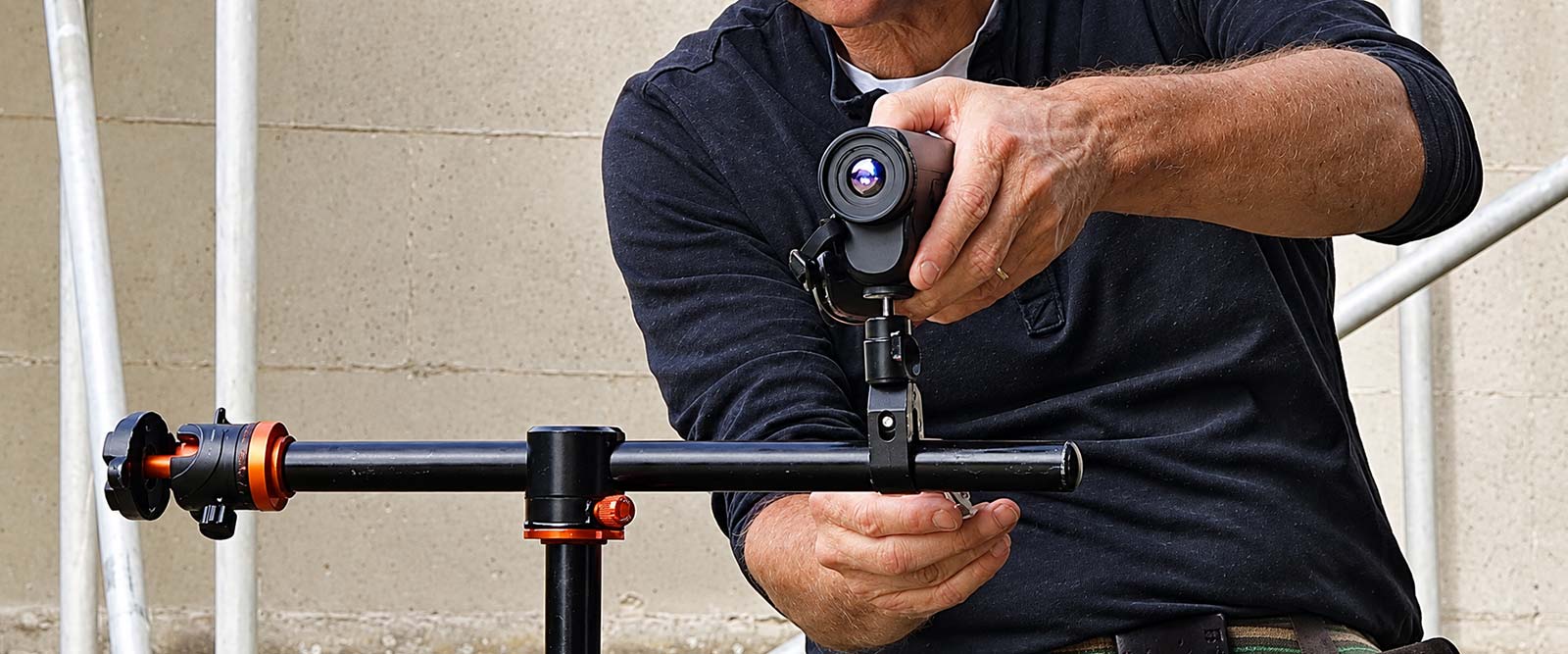
The A604 Pro is tripod-mountable and records continuously to its 32GB of internal storage in 30-minute clips, complete with audio. Mount it, press record and leave it running for the full length of a survey, with the footage there to review afterwards.
- Tripod-mountable for hands-free operation
- Continuous MP4 video with audio, saved in 30-minute clips
- Built-in storage, so there is no memory card to manage
- Still image capture alongside video
Tripod-mounted unattended recording
A survey that depends on someone watching a screen for hours also keeps a person close to the roost. The A604 Pro records continuously from a tripod to internal storage, so data collection runs with less disturbance at the site.
A survey that depends on someone watching a screen for hours also keeps a person close to the roost. The A604 Pro records continuously from a tripod to internal storage, so data collection runs with less disturbance at the site.
Power for a full night's survey
The A604 Pro is supplied with two rechargeable, replaceable batteries, each giving up to 6 hours of operating time. Swap in the second when the first runs low, or recharge via USB-C from a standard power bank to keep a session going beyond that.
How does the A604 Pro compare to the rest of the Arc range?
The Arc A604 Pro trades detection range for field of view and close-focus distance. This is a deliberate optical trade-off: a short 4mm lens that sees wide and close cannot throw a thermal signature as far as a longer lens. The Arc A613 Pro Ecology and Arc A613 Ecology take the opposite trade-off, a 13mm lens that gives up field of view to detect a heat source much further away. Both sit in the wider Pixfra Arc A6XX range, which also offers 25mm and 35mm lenses for longer detection distances.
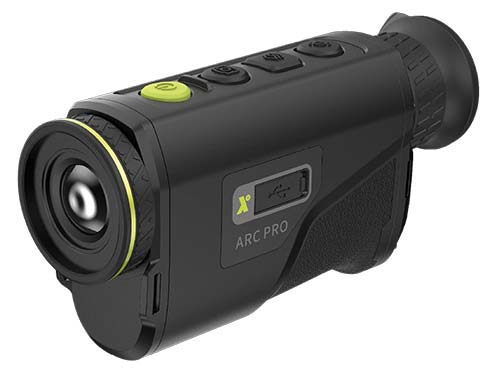
Arc A604 Pro
- Lens4mm f/1.0
- Field of view (H)102°
- NETD sensitivity<18mK
- Detection range200m
- Magnification0.4×
- Battery lifeUp to 6h, 2 supplied
- Weight380g
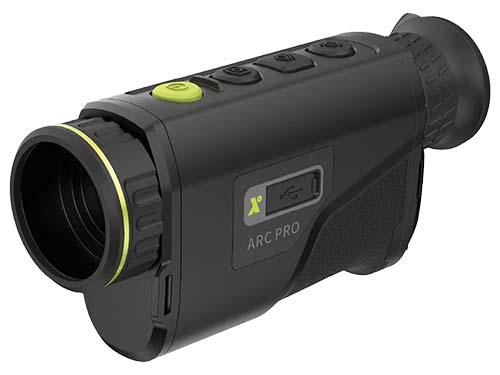
Arc A613 Pro Ecology
- Lens13mm f/1.0
- Field of view (H)32.3°
- NETD sensitivity<18mK
- Detection range700m
- Magnification1.1×
- Battery lifeUp to 6h, 2 supplied
- Weight370g
Arc A613 Ecology
- Lens13mm f/1.0
- Field of view (H)32.3°
- NETD sensitivity<30mK
- Detection range670m
- Magnification0.875×
- Battery lifeUp to 6.5h, 2 supplied
- Weight<350g
Pixfra Arc A604 Pro frequently asked questions
Why is the detection range only 200m when other Arc models reach 700m?
This comes down to lens focal length, not sensor quality. Both the A604 Pro and the Arc A613 Pro Ecology share the same 640×512, <18mK NETD sensor.
The A604 Pro's short 4mm lens is what produces its 102° field of view, but a short focal length throws a heat signature a shorter distance than a longer lens does. The A613 Pro's 13mm lens does the opposite: a narrower 32.3° view, in exchange for detecting a heat source out to 700m.
Choosing between them comes down to which trade-off suits the work: wide-area observation, or long-range detection.
Is the A604 Pro only useful for bat surveys?
Bat surveys and roost monitoring are where its wide field of view is most valuable, but the same characteristic suits interior building surveys, insect and invertebrate examination, non-invasive small mammal observation, and any fieldwork where the subject is close, fast-moving or in an unpredictable position.
How long will the batteries last during an overnight survey?
The A604 Pro is supplied with two rechargeable, replaceable batteries, each providing up to 6 hours of operating time. Swap in the second battery to extend a survey well past that, or recharge via the USB-C connection with a power bank.
Is the A604 Pro weatherproof?
Yes. It carries an IP67 rating, is built with a magnesium alloy housing and is rated to operate between -30°C and +55°C, so it keeps working through rain, fog and cold overnight conditions.
What's included?
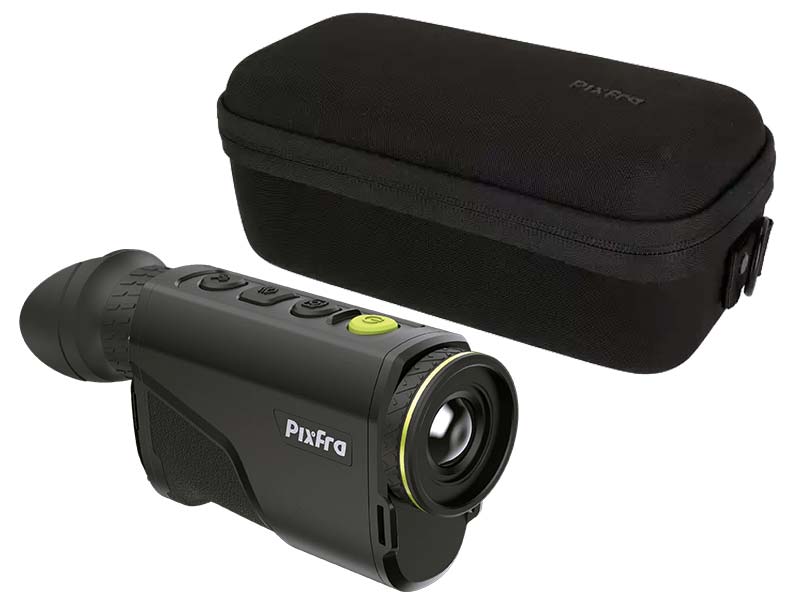
- Pixfra Arc A604 Pro Thermal Imaging Monocular
- Two rechargeable batteries
- USB-C charging cable
- Tripod adapter
- Carry case
- Lens cleaning cloth
- Quick start guide
£1,416.62
£1,699.94 inc vat
In Stock:
Available Next Working Day*
Free Tyre Inflator (Spend £500+)
Find Out More
60 Day Returns


Offers
Free Tyre Inflator (Spend £500+)
Automatically adds to your basket when the total exceeds £500+ (ex VAT). Limited Stock. More details here.
Technical Information
Specification
| Thermal Sensor | 640x512, 12μm, <18mK NETD |
|---|---|
| Detector Type | Vanadium oxide uncooled focal plane detector |
| Spectral Range | 8μm~14μm |
| Frame Rate | 50 Hz |
| Objective Lens | 4 mm f/1.0 |
| Field of View | H: 102°; V: 83° |
| Detection Range | 200m |
| Magnification | 0.4x |
| Colour Palettes | 6 (white hot/black hot /iron red/ alarm/amber/emerald) |
| Close Focus Distance | 20mm |
| Digital Zoom | 0.4-3.2x |
| Display Screen Dimensions | 0.41 inch, OLED |
| Screen Resolution | 1440 x 1080 |
| Diopter | -4D ~ +5D |
| Eye Relief | 15mm |
| Uniformity Correction | Auto; Manual |
| Storage | Built-in EMMC (32 GB) |
| Audio Recording | Yes |
| Hot Spot Trace | Yes |
| Wi-Fi | Yes |
| Power Supply | 5 V Type-C |
| Battery Type | 1 rechargeable 1850 Lithium battery |
| Battery Capacity | 3,200 mAh |
| Battery Operating Life | Up to 6 h |
| Operating Temperature | -30 °C to +55 °C |
| Protection | IP67 |
| Product Dimensions | 168 mm x 53 mm x 78 mm (6.61″ x 2.09″ x 3.01″) (L x W x H) |
| Net Weight | 380 g (battery excluded) |
Additional Information
SKU
PIX-PFI-A604P
Manufacturer Part Code
PIX-PFI-A604P

Pixfra Arc A604 Pro Ecology Thermal Imaging Monocular
£1,416.62
£1,699.94 inc vat
£1,416.62
£1,699.94 inc vat