


Mould isn’t simply unsightly. It’s dangerous. The tragic consequences of untreated mould became widely recognised in November 2022, when a Senior Coroner for Manchester North ruled that toddler Awaab Ishak’s death was caused by “a severe respiratory condition due to prolonged exposure to mould in his home environment.”[1] In response, the government introduced Awaab’s Law. It requires social housing landlords to investigate and mitigate damp and mould hazards within statutory timeframes, as well as provide tenants with written summaries of their findings.[2] Still, remediating established damp and mould can be costly. That’s why preventing mould by identifying and addressing mould-conducive conditions can help landlords avoid costly remedial work and protect residents’ health. Read on to discover four mould-prevention methods, alongside one supplementary measure to help keep properties clean and hygienic.
Quick Links
- What are the Ideal Conditions for Mould?
- How Can Inspection Instruments Help Landlords Prevent Mould and Comply with Awaab's Law?
- 1: Use Thermal Imaging to Detect Cold Spots and Assess Mould Risk
- 2: Assess Air Temperature and Humidity with a Thermohygrometer and IR Thermometer
- 3: Verify Air Ventilation with a Vane Anemometer
- 4: Measure Material Moisture with a Moisture Meter
- 5: Keep Surfaces Clean to Help Reduce Mould Risk
- Further Information
What are the Ideal Conditions for Mould?
Damp, poorly ventilated areas are particularly susceptible to condensation and, consequently, mould growth. When humid air comes into contact with surfaces below the dew point, water vapor condense into liquid droplets, creating conditions conducive to mould. In fact, “condensation is the leading cause of mould in homes across the UK.”[3]
This is why most people encounter mould in bathrooms, kitchens, and around windows. Cooking and washing generate steam, which in poorly or inadequately ventilated rooms causes relative humidity to rise. When this humid air meets cold surfaces, such as windows and external walls, condensation occurs. If the resulting moisture persists, it can encourage mould growth. [4]
How Can Inspection Instruments Help Landlords Prevent Mould and Comply with Awaab’s Law?
First and foremost, inspection instruments help landlords (or specialists employed on their behalf) identify and investigate damp and the conditions conducive to mould growth. By providing accurate measurements of environmental conditions, airflow, and material moisture, these damp measurement instruments help professionals identify potential problems, investigate underlying causes, and make informed decisions about appropriate remedial work.
As illustrated below, vane anemometers measure airflow velocity and volumetric flow, helping you assess ventilation performance and determine whether extraction systems are effectively removing humid air. Thermal cameras visualise cold spots, which may indicate thermal bridging, inadequate insulation or other potential problems. Used alongside temperature and humidity probes, they can also help identify areas at risk of condensation. Additionally, moisture meters allow professionals to assess moisture levels in building materials, helping identify areas that may require further investigation.
Importantly, damp inspection equipment speeds up and simplifies inspections, making it easier to work within statutory timelines. Measurement recording capabilities, combined with reporting and analysis apps or software (model dependent), significantly reduce administrative workloads. This makes it easier to document findings and provide tenants with a written summary of the investigation within the three working days, as required under Awaab's Law.
Read on to understand four ways mould detection equipment can help you spot and prevent mould before it damages your property. Plus, discover one additional measure you can take to complement these methods and keep homes hygienic.
1: Use Thermal Imaging to Detect Cold Spots and Assess Mould Risk
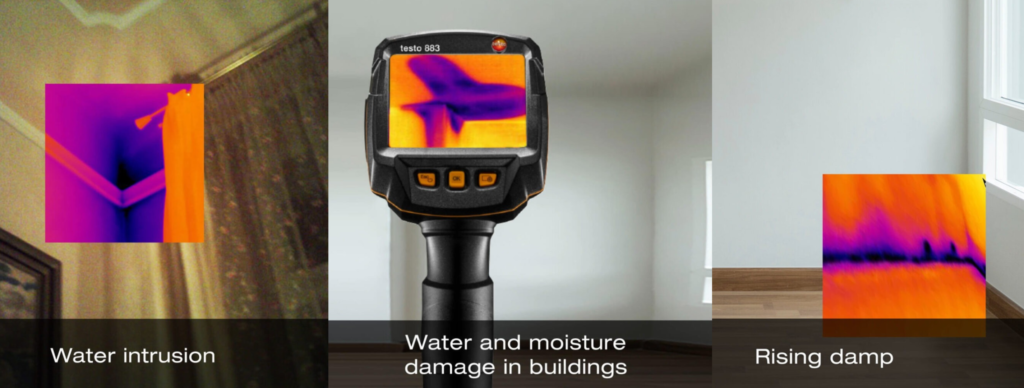
Thermal cameras capture infrared radiation and convert it into a visual heat map or thermal image, allowing you to see and measure the temperature distribution across a scene. It is important to note that thermal cameras cannot measure damp directly or confirm the presence of mould.
Nevertheless, thermal cameras do make it easy to identify cold spots; that is, sections of walls, windows, or ceilings (etc.) with a lower temperature than their immediate surroundings. Due to their decreased surface temperature, cold spots are more susceptible to surface condensation, and, subsequently, mould growth. In thermal images, they appear darker or show up in cooler colours (e.g., blue), allowing you to identify areas that may need further investigation or remediation to prevent condensation, damp, and mould.
Testo Thermal Imaging Cameras - Stop Mould Before It Starts
Testo’s extensive range of thermal cameras, including wireless modules, handheld imagers, and pocket cameras, is suitable for applications ranging from HVAC inspections and energy surveys to troubleshooting electrical and plumbing issues. However, did you know that selected Testo thermal cameras also feature a dedicated function for assessing mould risk?
Testo 871s, 872, 862, and 860i thermal imaging cameras all feature a dedicated Humidity mode. When set to this mode and used with Testo’s 605i Thermohygrometer, the camera combines surface temperature measurements with ambient air temperature and humidity readings to calculate the relative risk of surface moisture and, by extension, mould. A traffic light system indicates the degree of risk, enabling you to quickly identify problem areas:
- Red: high risk of surface moisture and, therefore, mould growth
- Amber: increased risk of surface moisture
- Green: good conditions, low risk of mould growth
Clear depiction of at-risk areas and risk severity allows you to conduct inspections efficiently, target remedial work effectively, and create reports quickly (when used with Testo's Smart or Thermography App, model dependent and excepting Testo's 862), supporting landlords in meeting their obligations under Awaab's Law.
Testo 871s Thermal Camera

- 240 x 180px IR resolution: 43 200 pixels and measuring points for capturing detailed thermal images and comprehensive temperature data.
- SuperResolution: pinpoint potential problems easily by enhancing image sharpness, increasing the IR resolution to 480 x 360px.
- Detect temperature differences as small as 0.08°C: identify marginal temperature differences that may be indicative of an impending fault so you can catch problems early.
- Compatible with the Testo Thermography App: use data to write, save, and send reports in the field, streamlining your workflow.
- Use with Testo Smart Probes: expand the camera’s inspection applications; for instance, use with the 605i Thermohygrometer to assess mould risk.
Testo 872 Thermal Camera

- 320 x 240px IR resolution: 76 800 pixels and measuring points for capturing detailed thermal images and comprehensive temperature data.
- SuperResolution: enhances image detail by increasing the IR resolution to 640 x 480px, allowing you to pinpoint problems easily.
- Detect temperature differences as small as 0.06°C: view subtle temperature differences to identify impending issues earlier.
- Compatible with the Testo Thermography App: complete jobs while on site; write, save, and send reports via your smartphone or tablet.
- Use with Testo Smart Probes: combine environmental measurements with thermal data for comprehensive investigations; for example, use with the Testo 605i Thermohygrometer to assess mould risk.
Testo 862 Thermal Cameras
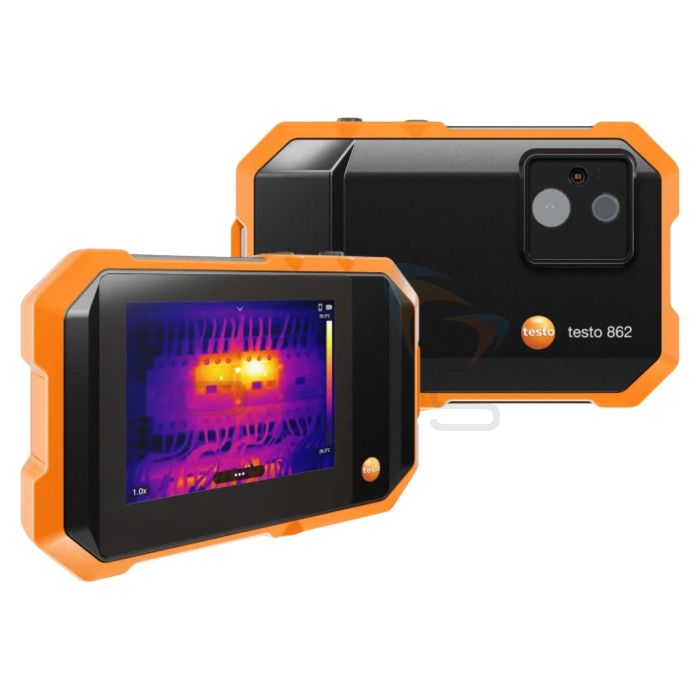
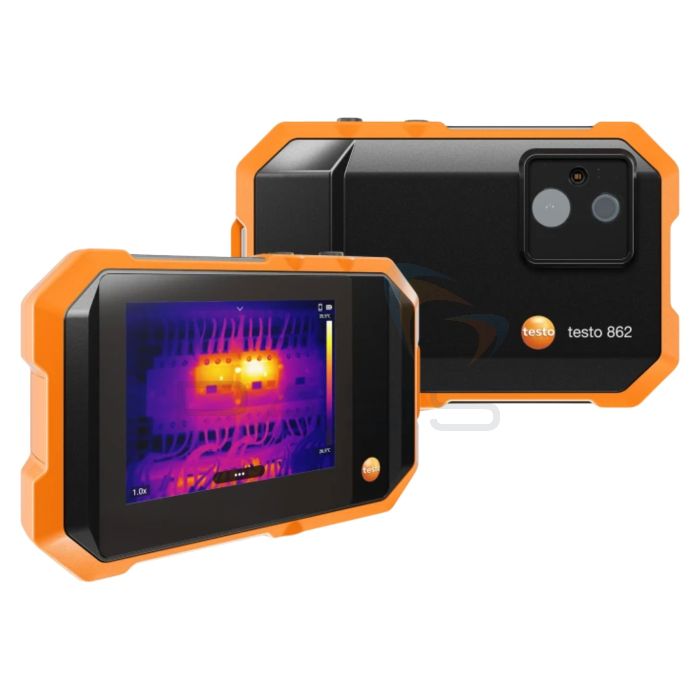
- High-quality thermal images: whether you select the 862-1 (160 x 120px) or 862-2 (256 x 192px), capture sharp thermal images that display subtle temperature differences needed to identify impending issues.
- Compatible with Testo Smart Probes: wirelessly connects to smart probes, like the Testo 605i, allowing you to gather additional data for comprehensive assessments (e.g., mould risk).
- Intuitive operation: seamless, smartphone-like interface so you can work quickly and effortlessly on site.
- IP54-rated and 1.5m drop-proof design: rugged construction meets the demands of everyday use.
Testo 860i Wireless Thermal Camera

- 256 x 192px IR resolution: crisp thermal imaging helps you spot issues quickly and easily.
- 50mK thermal sensitivity: detects subtle temperature differences so you can identify issues in their infancy.
- Wireless smartphone/tablet connection: connects via Bluetooth, facilitating flexible one-handed operation for access to hard-to-reach spaces.
- Use with Testo Smart Probes: deliver comprehensive insights, reports, and assessments by combining data captured using Testo’s Smart Probes with thermal images; for instance, use with the Testo 605i Thermohygrometer to evaluate mould risk.
- Compatible with Testo Smart App: streamline your workflow; access Testo’s measurement ecosystem, benefit from time-saving automatic calculations, and create reports on site.
- Rugged Design: IP54-rated and 1.5m drop-proof tested to meet the demands of everyday use.
Testo 860i Mould Kit – A Complete Set for Mould and Damp Assessment
 Testo 860i Mould Kit - Thermal Imaging Camera & Thermohygrometer
Specifically designed to assess mould risk, this Testo kit combines the 860i Wireless Thermal Camera and 605i Thermohygrometer, enabling professionals to identify cold spots, measure ambient temperature and humidity, and assess areas susceptible to mould growth.
Compatible with the free Testo Smart App, the kit also enables you to document findings, analyse measurements and create reports on site. This makes it particularly useful for professionals who carry out property inspections, including plumbers, surveyors, landlords and building maintenance specialists.
For social housing professionals, the Testo 860i Mould Kit provides a convenient solution for identifying potential mould risks, documenting findings and supporting the investigation and reporting processes required under Awaab's Law.
2: Assess Air Temperature and Humidity with a Thermohygrometer and IR Thermometer
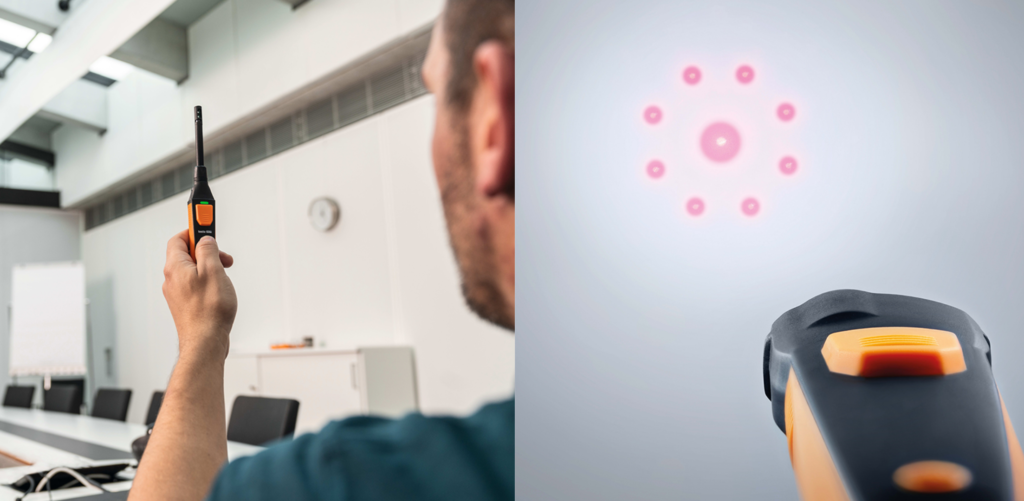
High relative humidity and cold surfaces can create the conditions for condensation and mould growth. When the surface temperature falls below dew point, water vapour in the surrounding air condenses to liquid droplets. Knowing the ambient humidity and temperature, as well as the surface temperatures within a room, allows you to assess the likelihood of condensation and identify areas at risk of mould growth. This helps professionals target further investigations and remedial work.
Testo Smart Probe Mould Kit - Affordable Air Temperature and Humidity Assessment
Testo’s Smart Probe Mould Kit is specifically designed for evaluating the likelihood of condensation and, by extension, mould risk. To this end, it includes a Testo 605i Thermohygrometer and a Testo 805i Infrared Thermometer supplied in a protective case with a foam insert.
When used in conjunction with Testo’s free Smart App (available for iOS and Android), the 605i Thermohygrometer measures air temperature and humidity while the 805i IR Thermometer determines surface temperature. From this environmental data, the Testo Smart App calculates dew point and wet bulb, while a dedicated mould-indication menu assesses the likelihood of mould growth using a traffic light system, e.g., red indicates a high risk, amber an elevated risk, whilst green illustrates low risk. Consequently, specialists and landlords can prioritise further investigations and target remedial work.
Furthermore, compatibility with the Testo Smart App not only allows you to carry out basic mould-risk assessments but also enables you to document findings and create reports quickly. This helps landlords keep clear records and supports the investigation and reporting processes required under Awaab's Law.

The Testo Smart Probe Mould Kit may be of particular interest to surveyors or landlords carrying out targeted inspections or working with a tighter equipment budget. Like the Testo 860i Mould Kit, it provides a practical way to assess potential mould risks and document findings without investing in a thermal camera.
Nonetheless, for professionals inspecting larger areas or managing multiple properties, the Testo 860i Mould Kit may be a more suitable option. The thermal imaging camera makes it easier to scan wider areas for cold spots, helping inspectors identify potential problem areas more quickly before taking closer measurements where necessary.
How to Use the Testo Smart Probes Mould Kit
How To Reduce Your Risk of Mould Using Testo Smart Probes
How to Use Testo's Smart Probe Features for Mould Growth Prevention
How To Reduce Surface Moisture Potential with Testo's Smart Probes and App
How to Create a Mould Inspection Report with the Testo Smart App
3: Verify Air Ventilation with a Vane Anemometer
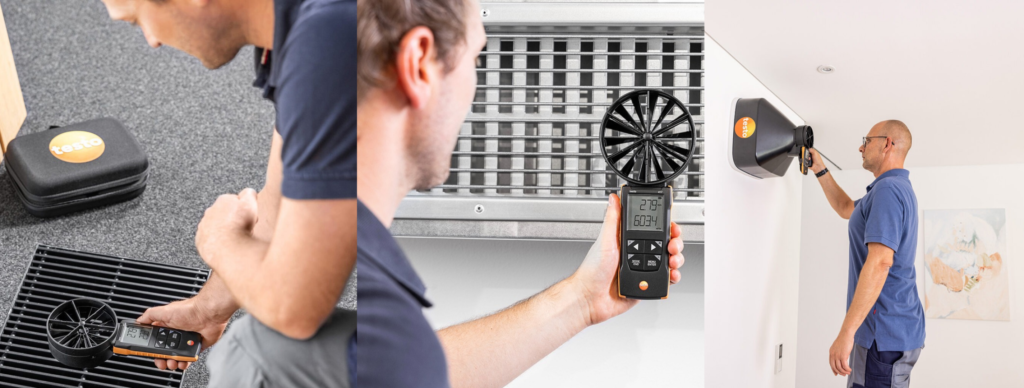
Poor ventilation can allow moisture to build up inside a property, increasing the likelihood of condensation when humid air comes into contact with cold surfaces below the dew point. Ensuring that ventilation and extraction systems work effectively helps remove moisture-laden air and reduce the risk of condensation and mould growth. A vane anemometer, such as Testo’s 417, measures airflow velocity and volumetric flow rate. As such, you can use it to assess the performance of ventilation and extraction systems, as well as monitor and troubleshoot HVAC equipment.
Testo 417 Digital Vane Anemometer – Assess Ventilation and Airflow

- Measure airflow, volumetric flow rate and temperature: take accurate measurements to assess ventilation performance and check whether extraction systems are delivering the required airflow.
- Compatible with the Testo Smart App: streamline your workflow by recording and documenting readings on site, configuring the 417 via your smartphone and using your phone as a second screen.
- 100mm diameter vane anemometer: quickly measure airflow at the inlets and outlets of air conditioning and ventilation systems.
- Automatic volume flow and time and point average calculations: simplify airflow measurements and save time adjusting balanced residential systems.
- Display light: keep working even in poorly lit areas.
- Compact design with robust housing: work comfortably in cramped spaces and rugged environments.
Testo 417 Vane Anemometer Features and Applications - Discover Everything You Need to Know in Less Than 20 Minutes!
4: Measure Material Moisture with a Moisture Meter
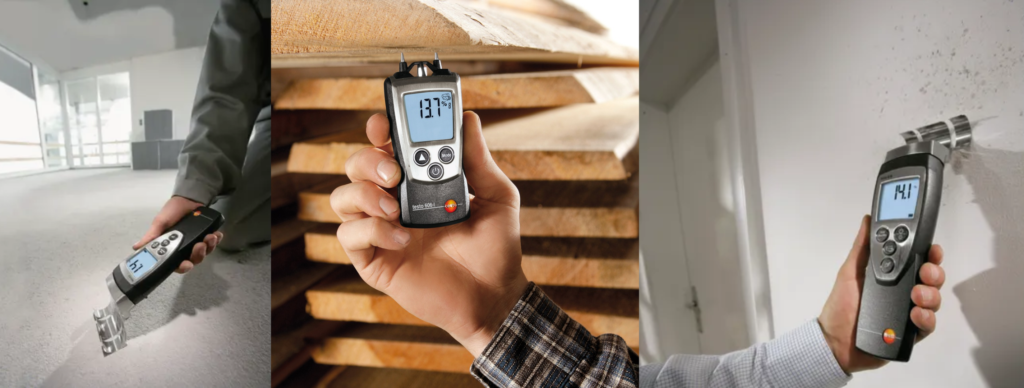
Unfortunately, cold spots in properties are particularly susceptible to surface condensation. If building materials absorb or retain any of this moisture, this can create the conditions conducive to mould growth. However, assessing water absorption in walls, floors, and other materials can be tricky. Moisture meters, such as Testo’s 616 and Testo 606, provide an easy and efficient method of measuring material moisture levels. Identifying areas with elevated readings allows you to target further investigations and corrective measures effectively.
Moisture meters are most effective when used alongside other inspection instruments. This is because, while they can identify areas with elevated moisture levels, they cannot determine the underlying cause; for instance water damage, condensation, or plumbing leaks. Further investigation is therefore necessary to determine the appropriate remedial action.
Testo 616 Moisture Meter - Precise, Non-invasive Moisture Measurement

- Measure the moisture content of many woods and building materials: suitable for an array of applications so you can keep working with one tool.
- 10 characteristic curves: test quickly and easily with 10 stored characteristic curves for a range of woods and building materials.
- Non-invasive testing: curved prongs deliver optimum contact pressure for measuring moisture to a depth of 5cm without damaging materials.
- Hold, min, and max functions: view multiple data points for inclusion in reports.
- Illuminated digital display: keep working even in poorly lit areas
Testo 606 Moisture Meters – Pocket-sized Meters For Precise Pin-based Moisture Readings


- Precise pin-based measurement of moisture in wood and building materials: no need for multiple meters; check a variety of materials with a single instrument.
- Stored characteristic curves: simplify and speed up measurement of beech, spruce, larch, oak, pine, maple, cement screed, plaster, anhydrite screed, cement mortar, lime mortar, and brick.
- Hold function: retain readings on screen for convenient recording.
- Illuminated display: keep testing even in poor lighting
- Testo 606-2: additional air temperature and humidity measurement, with dew point and wet-bulb calculations, to help assess conditions conducive to condensation.
5: Keep Surfaces Clean to Help Reduce Mould Risk
Mould can grow on a variety of household materials, including dust, paper, fabric and wood. Keeping surfaces clean, particularly in areas prone to condensation such as windows and seals, can help remove dust and other organic matter that may support mould growth.[5]
Antibacterial wipes offer a convenient way to clean suitable hard surfaces as part of a regular routine. However, you should not consider them a mould treatment or a substitute for removing existing mould with an appropriate cleaning product.
Furthermore, cleaning is only a supplementary measure. To prevent mould from returning, it is essential to identify and address the underlying causes of damp and condensation, such as inadequate ventilation, building defects, and moisture ingress.


Further Information
Proactive inspections can help landlords identify the conditions that encourage damp and mould growth before problems escalate. From thermal cameras and moisture meters to instruments for assessing humidity and ventilation, Testo offers a range of solutions to support property inspections and investigations.
For advice on choosing the right equipment for your requirements, please contact our Sales Team on 01642 931 329 or via our online form.
Alternatively, browse our range of Testo instruments below.
Maintain Healthy, Damp- and Mould-free Properties with the Help of Testo Products
Footnotes
[1] Katie Townsend, ‘What is Awaab’s Law?’, Centre For London, last accessed 12 November 2026.
[2] Ministry of Housing, Communities and Local Government, ‘Awaab’s Law in the social rented sector’, GOV.UK, last accessed 12 November 2026.
[3] Tim Dodd and James Gregory, ‘Black mould: How dangerous is it in the home and how can it be treated?’, BBC News, last accessed 13 November 2026.
[4] BMS CAT, What Does Mold Need to Grow? 6 Things You Need to Prepare For, last accessed 13 November 2026. Nimbus Homes, Conditions for Mould to Grow: Causes and Factors, last accessed 13 November 2026.
[5] BMS CAT, What Does Mold Need to Grow? 6 Things You Need to Prepare For, last accessed 13 November 2026. Nimbus Homes, Conditions for Mould to Grow: Causes and Factors, last accessed 13 November 2026.